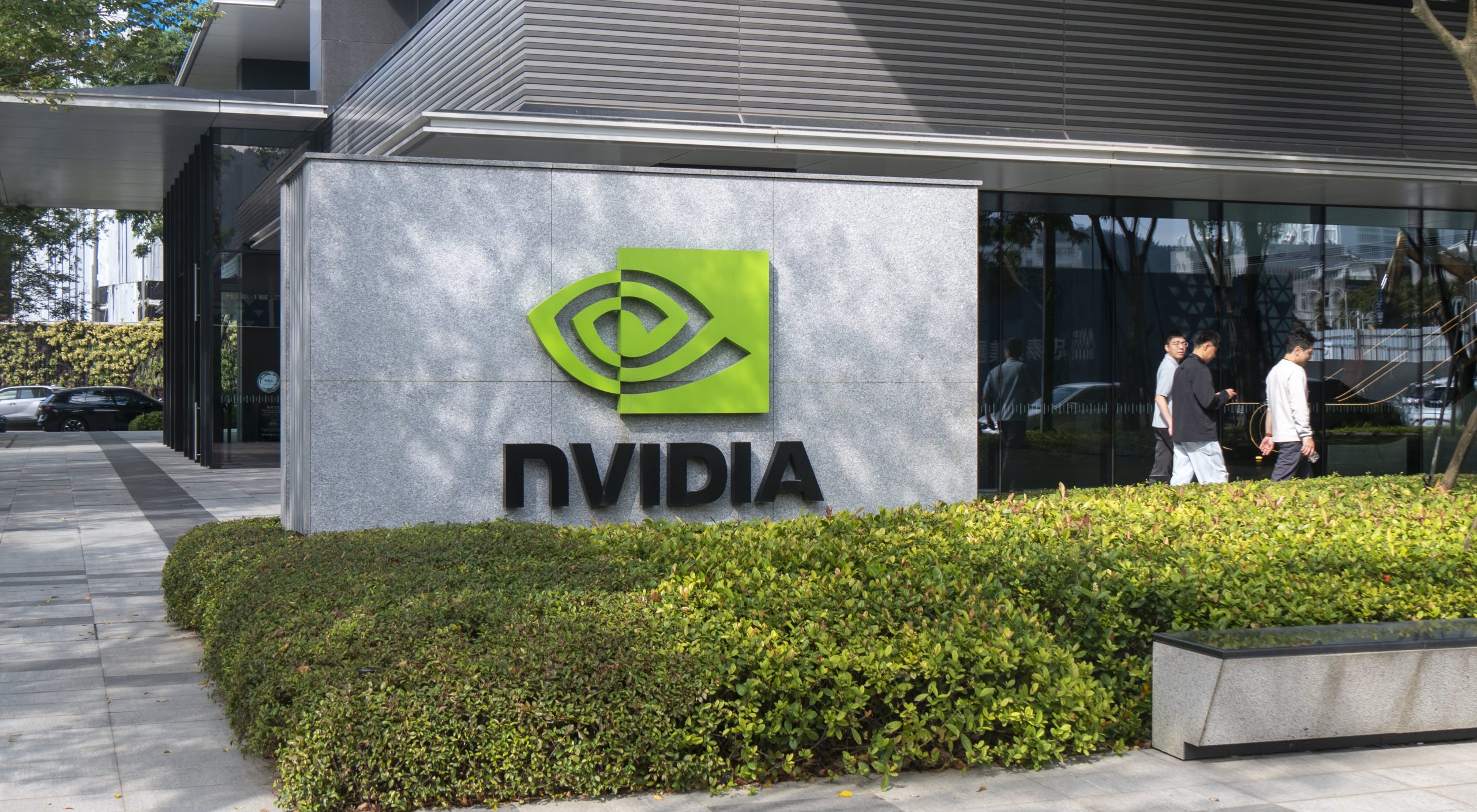
The Nvidia share price fell 14% on Friday, according to CNBC, capping a seventh straight weekly loss and wiping roughly $2.6 trillion off the chipmaker’s market value.
The fall marked Nvidia’s seventh consecutive weekly decline, the longest losing streak since the 2008 financial crisis, CNBC reports. Shares are down 46% over the seven weeks, and the company’s market capitalisation has slipped to $3 trillion, pushing Nvidia from the world’s most valuable company into fourth place behind Apple, Microsoft and Alphabet, according to CNBC.
Reuters reported on Friday that the Securities and Exchange Commission is exploring potential accounting issues at Nvidia, CNBC notes, adding further pressure to a stock already under strain. The Reuters report on the ranking shift confirmed Nvidia had slipped below Alphabet in valuation.
The slide has deepened since Jensen Huang’s resignation as chief executive on 12 November, CNBC reports, after what newly appointed board chair Harvey Jones said was “disclosure of personal behavior inconsistent with the company’s code of conduct, standards and cultural norms.” But CNBC notes the losing streak began before that, as investors questioned the pace of the AI buildout and weighed up growing chip competition from Google and AMD.
A better-than-expected earnings report, including an increase to fiscal 2028 guidance, did not stem the selling, CNBC reports. Interim chief executive Colette Kress, Nvidia’s long-serving chief financial officer, projected revenue growth of 75% for the next fiscal year and told analysts customers “aren’t going anywhere,” ending the call by saying “we’ve got this,” according to CNBC. The company has also moved its yearly staff review process, which can bring extra stock, from March to December, CNBC adds.
The stock is now trading at roughly 8.4 times forward earnings, while rival AMD is valued at 29 times profit for the next 12 months, CNBC reports. Separately, Yahoo Finance UK reports that three customers made up 44% of Nvidia’s sales in the first six months of its 2027 financial year, and that rival Anthropic has said it can get its Claude AI model running on AMD chips in about three days, with around 80% of its GPU orders cancellable on 90 days’ notice.
Why it matters for a small business owner
Nvidia’s shares are not something most small firms hold directly. But the scale of the move, a company losing $2.6 trillion in value and dropping out of the top three in seven weeks, is the kind of shock that shows up in pension funds, business confidence surveys and the price of the cloud and AI tools many SMEs now rely on. It is a reminder that a single supplier’s fortunes can ripple through an entire technology market, much as the FTSE 100’s recent 5% fall rippled through SME borrowing costs and investment plans.
It also underlines a leadership lesson that applies at any size of business. When a chief executive departs suddenly, as happened at Nvidia and, in a calmer fashion, at Starling Bank with Raman Bhatia’s planned departure, markets and customers alike want clarity fast on who is in charge and what changes. Owners who have a named successor, even informally, are better placed to reassure staff, suppliers and lenders if something similar happens to them.
What to do now
Do not make snap decisions based on one volatile week. If your business, your pension provider or your investment platform holds Nvidia shares or a tech-heavy fund, check your exposure rather than reacting to headlines. If you rely on AI tools built on Nvidia hardware, in the cloud or on-premise, this is a prompt to ask your supplier whether pricing or service plans are linked to chip costs, and whether they have a backup if one supplier’s position shifts.
If you are weighing up new AI investment for your business, the underlying signal here is about concentration risk, not about whether AI tools are worth using. Keep an eye on how the story develops rather than pausing AI adoption altogether, and use the opportunity to ask any software supplier what happens to your service if their underlying chip or cloud supplier changes terms.
Why has the Nvidia share price fallen so much?
CNBC reports the stock fell 14% on Friday alone, part of a seventh straight weekly decline driven by concerns over the AI buildout, emerging chip competition, Jensen Huang’s resignation, and a Reuters report that the SEC is examining potential accounting issues at the company.
Is Nvidia still the world’s most valuable company?
No. CNBC reports Nvidia’s market cap has fallen to $3 trillion, putting it fourth behind Apple, Microsoft and Alphabet, having previously held the top spot.
Should UK small business owners worry about the Nvidia share price?
Not directly, unless you hold the shares or a tech-weighted fund, but it is worth checking any pension exposure and asking your AI or software suppliers whether their pricing depends on a single chipmaker.
The takeaway: Nvidia’s worst run since 2008 is a market story first, but it is a useful prompt for any owner to check their pension exposure and ask AI suppliers how dependent their service is on one chipmaker.
Photo: cnbc.com