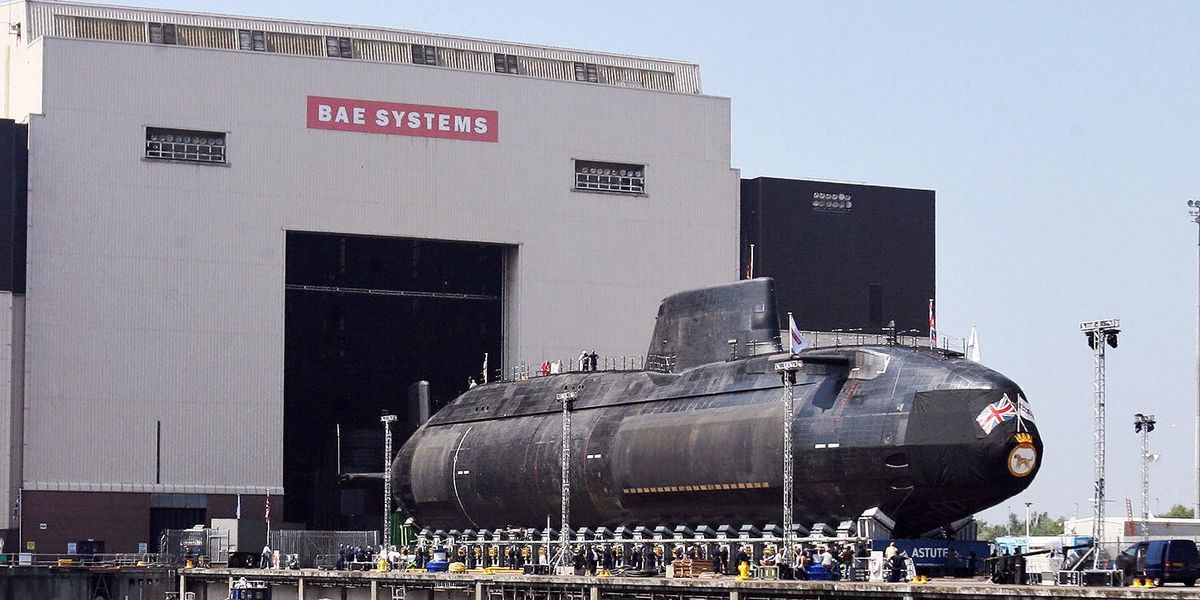
Britain’s biggest defence contractor is cutting more than a thousand jobs, with most of the losses falling on its air division, and the union representing workers says years of government delays share the blame.
BAE Systems is cutting more than 1,000 jobs, with most of the losses falling on its air division, and the union Unite says years of delayed government defence decisions share the blame, GB News reports.
The company confirmed 1,070 redundancies, according to GB News, with the air division, which includes fighter jet production, shouldering the majority of the cuts. BAE said it hopes to clear most of the roles through a voluntary redundancy process, GB News reports. The company currently employs more than 50,000 people, up from 35,000 six years ago, with around 18,500 working in the air sector and another 1,000 at its head office, according to GB News.
A BAE spokesman said the move was “the next stage of our ongoing focus on enhancing our agility and competitiveness” and would “help to maximise the value of every pound our customers spend on defence”, GB News reports. The cuts come despite BAE forecasting that its underlying operating profit would increase by 10 to 12 per cent in 2026, according to GB News.
Unite general secretary Sharon Graham blamed the losses on delays in government defence spending. “For months, Unite has been warning that delays in defence spending are driving companies in the sector to make negative decisions impacting British jobs,” she said, as quoted by GB News. She added: “On the day after the government backed a major boost in apprenticeships, we now have our biggest defence company announcing nearly a thousand redundancies. This shows a lack of joined-up thinking in government.” Graham also called on ministers to award the Skynet 6 contract to Airbus, which she said would protect jobs in Portsmouth and Stevenage, GB News reports.
What this means for small businesses
BAE Systems is not just a single employer. It sits at the top of a long supply chain of smaller firms, from precision engineers and electronics specialists to logistics and facilities contractors, who depend on steady defence work. When a company this size trims headcount in a division as large as its air sector, the ripple effects reach subcontractors long before they reach the headlines.
If your business supplies, services or employs former workers connected to the defence sector, this is a moment to check your exposure. A single large customer scaling back can tighten your own cashflow fast, and the pattern Unite describes, of defence firms making “negative decisions” while waiting on government contracts, is a reminder that public spending delays do not stay contained to one company.
There is a wider lesson here for any owner watching business investment sentiment. Confidence in big-ticket spending can shift quickly even when a company’s own figures look strong, something explored in Smart SME’s coverage of why two-thirds of UK CFOs are more upbeat on investment for 2027, which shows sentiment and hard decisions do not always move in step.
What to do now
If you supply into defence or aerospace, however indirectly, speak to your contact at the prime contractor this week rather than waiting for a formal notice. Ask plainly whether your work is affected by the voluntary redundancy process BAE has described, and get any answer in writing.
If you employ people with transferable engineering, manufacturing or technical skills, this is also a recruitment opportunity. Experienced staff leaving a major employer through voluntary redundancy are often available quickly and come with strong references. Firms in manufacturing more broadly, including those watching how larger UK industrial names such as Rolls-Royce manage their own financial position, as covered in Smart SME’s report on Rolls-Royce’s 2026 guidance and £1.5bn buyback, should keep an eye on how sector-wide investment decisions affect their own order books.
And if your business is sensitive to wider economic conditions rather than defence spending specifically, it is worth reading Smart SME’s explainer on what a steepening Treasury yield curve means for SME costs, since borrowing costs and government spending decisions tend to move together.
How many jobs is BAE Systems cutting?
BAE Systems confirmed 1,070 redundancies, according to GB News, describing the cuts as more than 1,000 roles with most falling in its air division.
Why is BAE Systems cutting jobs?
BAE said the cuts would make the company “more agile” and help “maximise the value of every pound” customers spend on defence, according to GB News. Unite’s Sharon Graham blamed delays in government defence spending decisions for driving the move.
Will the BAE Systems job cuts be compulsory?
BAE said it hopes to clear most of the roles through a voluntary redundancy process, according to GB News.
The takeaway: BAE Systems is cutting more than 1,000 jobs from its air division, and any business touching the defence supply chain should check its exposure and talk to its contacts there this week, not after a formal announcement lands.
Photo: gbnews.com