
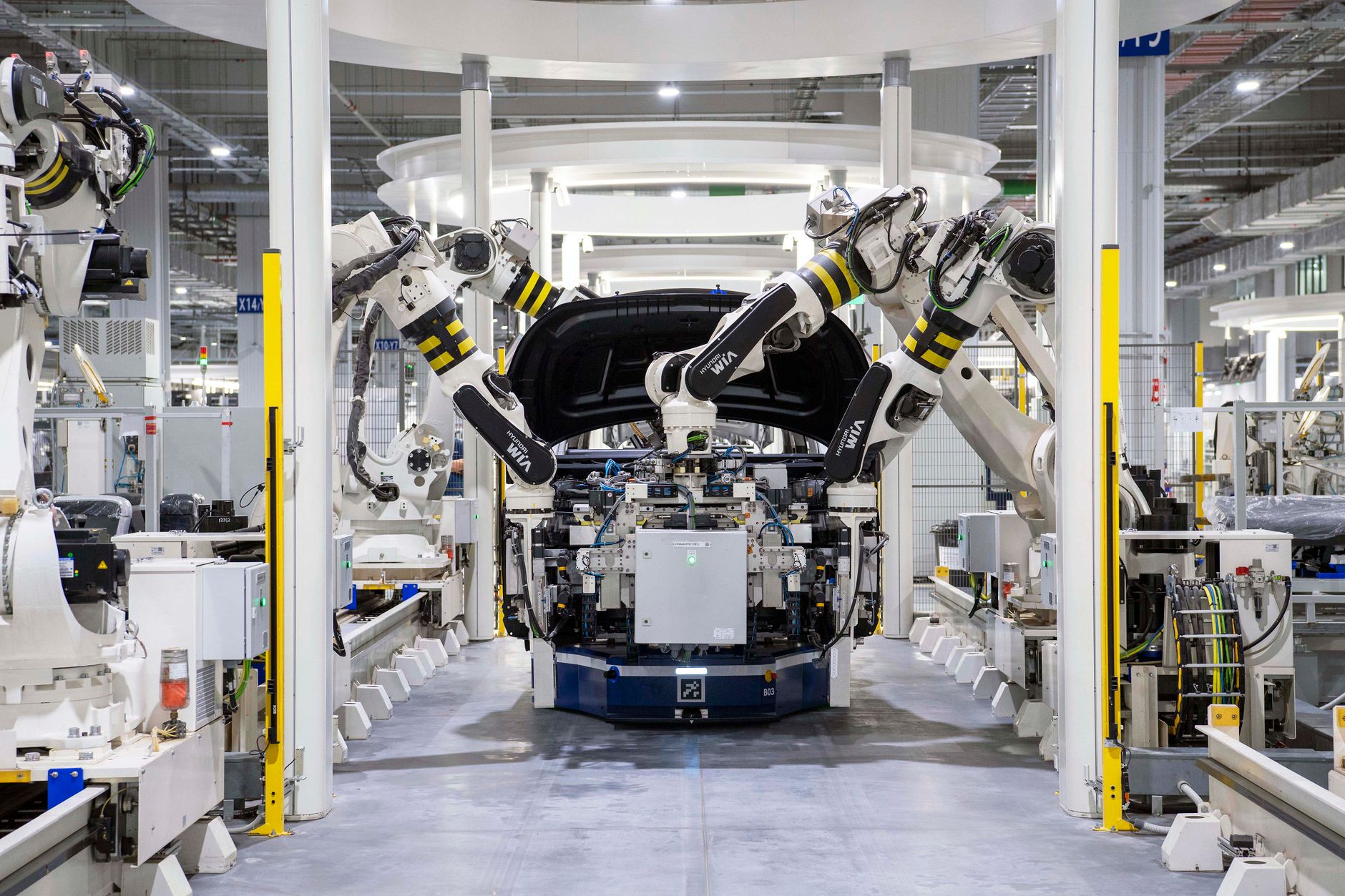
Most small firms will never buy a fleet of robots. But the businesses that supply, staff and finance them are already facing a robotics readiness gap, planning for a workplace where people and machines work side by side long before robots reach the shop floor.
Research commissioned by Intel and carried out by Man Bites Dog and Coleman Parkes Research finds that six in 10 senior leaders expect their organisation to operate a fleet of robots within five years, but only four in 10 currently have a formal strategy for managing a mixed human-robot workforce. Intel’s vice president for its Industrial and Robotics Division, John Healy, says the businesses that embed robotics into their core operations “rather than layering them on top of existing systems” will be the ones that capture the full value of the shift, a pattern also visible in Dell’s study of UK SME AI front-runners.
The study, called The Robotics Readiness Gap, surveyed 800 senior business and IT leaders, robotics specialists, and government and healthcare officials across the US, UK, Germany, Japan, China and South Korea. Every organisation involved had annual revenue above $500 million, so this is a big-company snapshot rather than an SME one. That matters when reading the headline numbers: the leaders answering this survey run budgets and supply chains that most small firms will never touch directly.
Even so, the detail is worth a look. Two-thirds of leaders believe robotics will make their human workforce more skilled rather than replace it, yet four in 10 say a lack of skills and talent is already blocking them from scaling robotics further. Similar skills gaps are showing up in Xero’s research on AI adoption doubling profitability at accounting firms. Just over half say safety concerns have delayed deployment, and 68% want clearer global safety standards before they push ahead. Three-quarters say robots need to make split-second decisions, often in under 100 milliseconds, which is why Intel is pitching its edge AI chips, a shift small businesses can track via ChatGPT’s new small business agent rollout and its Robotics AI Suite and OpenVINO software as the infrastructure to close that gap.
For SME owners, the direct read-across is narrow but the indirect one is not. If your business supplies parts, logistics or maintenance to a larger firm that is automating its warehouse or production line, expect procurement conversations to shift towards uptime, integration and safety compliance rather than price alone, and firms preparing staff for AI-driven change can start with our guide on writing an AI usage policy for small businesses. If you employ people whose roles sit near automated systems, the same workforce-planning questions apply at a smaller scale, and the thinking behind our piece on how UK firms are settling into a low-hire, low-fire mode is a useful starting point for planning ahead of any automation, not just robotics.
The more immediate lesson for smaller businesses is about strategy, not steel. Intel’s leaders are being caught out by moving fast on adoption without a plan for the people alongside the technology, and that same trap catches SMEs adopting AI tools long before anyone buys a robot. Our research into which UK SME AI front-runners save the most time found that a written plan, not just enthusiasm, was what separated firms getting real value from AI. Pairing any automation rollout with a simple AI usage policy costs nothing and avoids the same readiness gap Intel found at enterprise scale.
If robotics or heavier automation is on your radar for warehousing, production or logistics, start smaller. Tools built for workflow automation, such as the alternatives compared in our look at automation platforms beyond Workato, let a small team test where automation actually saves time before any capital spend on hardware. The takeaway from Intel’s numbers is not that every business needs a robot. It is that whoever automates first without a plan for the humans involved usually pays for it later.